
In a world driven by digital transformation, data has become the backbone of modern business operations. Companies today generate massive volumes of data from applications, customers, sensors, and cloud platforms. However, collecting data is not enough—businesses must design systems that can store, process, and analyze it efficiently as they scale.
This is where an Azure Data Engineering course becomes highly valuable. It equips professionals and organizations with the skills needed to build scalable, reliable, and cost-effective data architectures using Microsoft Azure. Let’s explore how Azure Data Engineering simplifies scalable data architecture and why it is becoming essential for modern businesses.
Why Scalable Data Architecture Matters More Than Ever
As businesses grow, their data grows even faster. Without a scalable architecture, organizations often face:
- Slow data processing and delayed insights
- High infrastructure costs
- Difficulty handling real-time and historical data together
- Disconnected systems and data silos
- Limited support for analytics and decision-making
A scalable data architecture ensures that systems adapt seamlessly to increasing workloads while maintaining performance, security, and flexibility.
What Is Azure Data Engineering?
Azure Data Engineering focuses on designing and managing data pipelines, storage systems, and processing frameworks using Microsoft Azure’s cloud services. It allows businesses to handle large and complex datasets without worrying about hardware limitations.
Through Microsoft Azure training online, learners gain hands-on exposure to cloud-based data solutions that support both operational and analytical workloads.
How Azure Data Engineering Simplifies Scalable Data Architecture
1. Cloud-Native Scalability Without Complexity
Azure eliminates the need for physical infrastructure planning. Businesses can scale storage and compute resources instantly based on demand. Whether data volume doubles overnight or usage spikes during peak seasons, Azure handles it without disruption.
This elasticity makes Azure ideal for businesses that need flexibility without long-term infrastructure commitments.
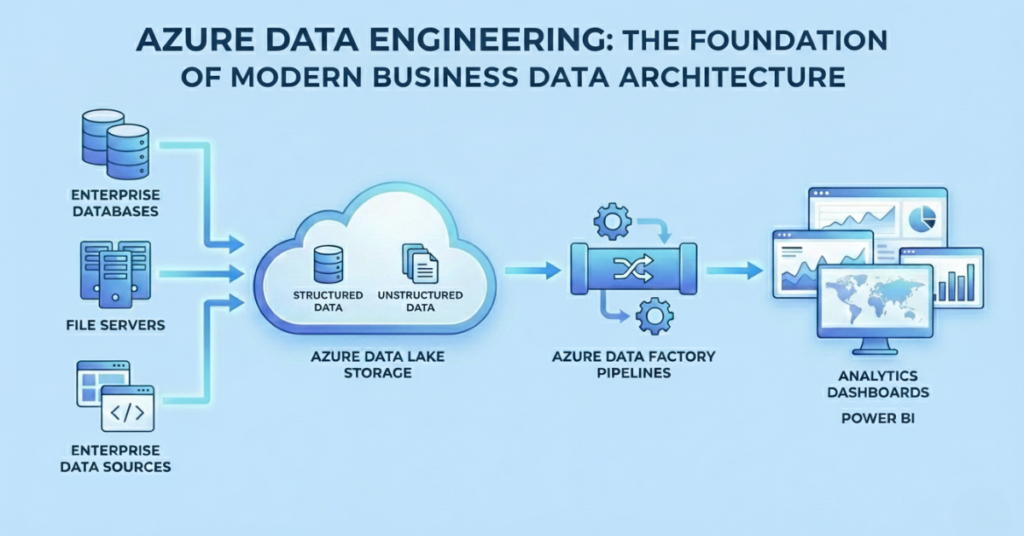
2. Unified Data Storage with Azure Data Lake
Modern businesses deal with structured, semi-structured, and unstructured data. Azure Data Lake training teaches how to store all these data types in a single, centralized platform.
Key advantages include:
- High-performance storage for large datasets
- Secure access control and data protection
- Easy integration with analytics and processing tools
By centralizing data, businesses reduce fragmentation and make data more accessible for analytics.
3. Automated Data Pipelines Using Azure Data Factory
Building and maintaining data pipelines manually can be time-consuming and error-prone. Azure Data Factory training focuses on creating automated pipelines that move and transform data across systems efficiently.
With Azure Data Factory, businesses can:
- Connect to on-premises and cloud data sources
- Schedule data workflows automatically
- Monitor pipelines in real time
Automation ensures consistent data availability and reduces operational overhead.
4. High-Speed Data Processing for Analytics
Azure integrates seamlessly with advanced analytics platforms to process massive datasets quickly. This enables businesses to run complex transformations, support real-time analytics, and prepare data for reporting tools.
For organizations offering analytics services or dashboards, Azure works smoothly alongside platforms such as data analytics and visualization solutions, making insights accessible across teams. Learn more about related learning paths through Global Teq’s data analytics programs.
5. Built-In Security and Governance
Security is a critical requirement for scalable data systems. Azure provides enterprise-grade features such as:
- Role-based access control
- Data encryption during storage and transfer
- Monitoring and compliance support
These capabilities help businesses maintain trust while meeting regulatory and internal governance standards.
6. Seamless Integration with Business Intelligence Tools
Scalable data architecture delivers value only when insights reach decision-makers. Azure integrates easily with business intelligence platforms like Power BI, allowing teams to visualize trends and performance metrics in real time.
Organizations that want to strengthen their reporting capabilities often combine Azure Data Engineering with tools such as Microsoft Power BI training to turn raw data into actionable insights.
Business Benefits of Azure Data Engineering
By adopting Azure Data Engineering, modern businesses gain:
- Faster access to reliable data
- Lower infrastructure and maintenance costs
- Improved collaboration between technical and business teams
- Better readiness for advanced analytics and AI initiatives
- A future-proof data foundation that grows with the business
These benefits explain why cloud-first data strategies are becoming the norm across industries.
Why Choose an Azure Data Engineering Course
An Azure Data Engineering course helps learners understand how real-world data systems are designed and maintained in the cloud. It is especially valuable for:
- IT professionals upgrading to cloud roles
- Data analysts moving toward engineering responsibilities
- Career switchers entering high-demand data roles
For those new to the cloud ecosystem, exploring broader learning options such as cloud computing training courses can provide a strong foundation before specializing.
Final Thoughts
Scalable data architecture is no longer a technical luxury—it’s a business necessity. Azure Data Engineering simplifies this journey by offering flexible, secure, and high-performance cloud tools that grow alongside modern organizations.
Whether you are a business leader building data-driven systems or a professional investing in future-ready skills, learning Azure Data Engineering can help you stay competitive in today’s data-centric world.
To learn more about Azure Data Engineering training options, visit the official course page here:
👉 https://www.global-teq.com/azure-data-engineering-course/
For personalized guidance, feel free to reach out to us.
FAQs
1. What is the main goal of an Azure Data Engineering course?
It focuses on teaching how to design, build, and manage scalable data systems using Microsoft Azure services.
2. Is Azure Data Engineering suitable for beginners?
Yes, especially for those with basic IT or data knowledge who want to move into cloud-based data roles.
3. How does Azure Data Lake help businesses?
It provides a centralized, scalable storage platform for all data types, making analytics and processing easier.
4. Why is Azure Data Factory important in data architecture?
It automates data movement and transformation, reducing manual effort and ensuring reliable data pipelines.
5. Can Azure Data Engineering support business analytics?
Yes, it integrates smoothly with analytics and visualization tools, enabling faster insights and better decisions.


